Showing posts with label 5-stars. Show all posts

Friday, 25 October 2019

Police at the Station and They Don't Look Friendly

Police at the Station and They Don't Look Friendly (Detective Sean Duffy #6)Police at the Station and They Don't Look Friendly by Adrian McKinty
My rating: 5 of 5 stars

I read this for the Crimes & Thrillers reading group I attend, and my heart usually sinks when we get titles like this. Little did I realize what it was: extraordinary historical crime fiction set in Belfast in the 1980s during the troubles, told in one of the most unique first-person voices I have ever encountered. Great stuff!

View all my reviews

Friday, 21 June 2019

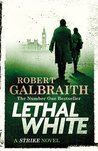
Lethal White

Lethal White (Cormoran Strike, #4)Lethal White by Robert Galbraith
My rating: 5 of 5 stars

For my hundredth review on Goodreads I wanted something very, very special, and I certainly struck gold with this, J. K. Rowling’s fourth outing as Robert Galbraith.

So, what’s in store for Cormoran Strike and his business partner Robin Ellacott this time round? A year after Robin’s disastrous wedding ceremony, a mentally-ill young man comes to Strike’s office with a tale about a murder he thinks he witnessed as a child. Realising the police have been called, he flees, though shortly after Strike is offered a lucrative job by the Minister for Culture, who is being blackmailed by the young man’s dodgy brother. A coincidence perhaps? Or something more?

Rowling admits that this is one of the most challenging books she’s ever written and one of her favourites. Mine too. It’s with sheer writerly delight that she taunts us with Robin’s failing marriage, which Robin tries at all costs to keep from Strike. The increasingly annoying wild child Charlotte turns up, hell bent on inserting herself back into Strike’s life. Let’s be quite clear here. This is a series of cozy mysteries, and thwarting the readers’ desire for the two of them to become more than just business partners is an important part of the template, of equal significance, I would argue, to the whodunnit element of the book.

The whodunnit element in this case twists and turns back in on itself (perhaps a little too often), and quite which crime we’re meant to be looking at (and there are potentially many) is never very clear. That said, I was thoroughly happy to be taken along for the ride. On several occasions I was put in mind of Agatha Christie in the nature of the clues and the way they are delivered. Robin twice gets to go undercover—both of which are a joy to read—and Strike is tight-lipped about the theories he forms, preferring his partner to work it out for herself.

As personal added bonus, and one which really made it come alive for me, I happen to live very close to two of the locations in the book. The Minister for Sport and her husband live a mile west of me, near The Blue, and the house Robin and Matthew rent is barely a couple of miles down the road. Even before Rowling named it, I knew which one it was.

If you’re a fan of the series, you’ll love it. If you’re a fan of whodunnits, you’ll love it. If you’re a cozy mystery armchair detective, I’m sure you can guess just what I was about to say.

View all my reviews

Thursday, 27 September 2018

The Mangle Street Murders

The Mangle Street Murders (The Gower Street Detective, #1)The Mangle Street Murders by M.R.C. Kasasian
My rating: 5 of 5 stars

It’s the London of 1882. When Mrs Dillinger approaches Mr Sidney Grice—Britain’s foremost personal detective—with a plea that he exonerate her son-in-law, an ironmonger accused of murdering her daughter, he refuses outright. It is only when Miss March Middleton—his new ward who has only recently arrived in the metropolis—agrees to pay for his services that he accepts…with disastrous results for everyone concerned.

This wonderful, fast-paced Penny Dreadful is the first in a deservedly well-loved series, one that I came to when by chance I happened to pick up one of the later books, and it was a pleasure to meet all the regular characters again, this time on their very first outing.

So what can you expect? Well, there are a number of grisly murders, with the murder scenes described in gory, vivid detail. There’s a generous dollop of humour, most of it black. There’s a fair amount of indignation at the position of women in Victorian society. There are plenty of twists. And there is an excellent narrative voice in the form of March Middleton, a very modern young woman, who provides the perfect counterfoil to her cantankerous guardian. I can honestly say it was right up my street.

View all my reviews

Friday, 1 June 2018

Betty Church and the Suffolk Vampire

Betty Church and the Suffolk Vampire (A Betty Church Mystery Book 1)Betty Church and the Suffolk Vampire by M.R.C. Kasasian
My rating: 5 of 5 stars

The year is 1939 and, as Britain prepares for coming war, Betty Church prepares to return to her home town of Sackwater in coastal Suffolk to do battle of her own—as a police inspector, no less. How will she, a woman, be received into this traditionally male realm by her fellow officers?

Fans of M. R. C. Kasasian’s Gower Street Detective series (of which I am one) will love his new creation. Not only is Betty Church logical and tough, she is also March Middleton’s godchild—a good thing, too, since she is about to face a most puzzling series of murders, which may or may not have something to do with one of her constables’ past.

The cast of rude mechanicals in Betty’s charge ensures that Mr Kasasian can continue the absurdist comedy for which he is renowned. Be it the corpse she finds that turns out to be only her sleeping sergeant, or Woman Police Constable Dodo Chivers, who takes every statement quite literally, humour abounds. Where Dodo is concerned (like Mr Grice before her in the Gower Street novels), it can send conversations off at increasingly surreal tangents, which can require a careful reading if you’re to get the joke.

Her bumbling colleagues aside though, Betty also has a wealth friends who are quietly but delightfully developed as characters—fixtures, I hope, for many journeys to come. I especially liked Captain Carmelo (her ex-boyfriend’s Maltese father), Jimmy (her ex-boyfriend’s nephew, who considers her to be his aunt), and Dr Tubby Gretham and his wife. There has even been speculation on Twitter that Mr Kasasian himself pops up in the role of Betty’s father, an unpopular dentist who can hardly be civil to his own daughter, let alone to his dwindling number of patients. As for the mystery element, there are some particularly grisly murders, a lot of blood, and an extremely enticing red herring. More than this I dare not say for fear of spoilers.

One of the great pleasures of reading an M. R. C. Kasasian novel is that nothing will be quite as you imagine it should be, whether it’s a character’s name, their appearance, their background, or even their interpersonal relationships—and with Betty Church and the Suffolk Vampire, Mr Kasasian takes this to a whole new level. Within the cozy mystery genre his voice is unique. If you delight in meeting a truly new kind of character, you will certainly delight in this. Be warned though; Victorian sensibilities are a thing of the past and the ripeness of some of the language may come as a shock.

If you enjoy comedy like this, you might also enjoy (although they are not Crimes & Thrillers) James Hamilton-Patterson’s Cooking with Fernet Branca, Patrick Dennis’s Auntie Mame (or better still—if you can manage to get your hands on a copy—Little Me), and even perhaps Evelyn Waugh’s Decline and Fall. Fans of the Grinder-Snipe twins will relish in Kenneth Williams and Charles Hawtrey’s Julian and Sandy from the vintage BBC radio series Round the Horne. Varder the big bona lallies on him!

Many thanks to @MRCKASASIAN, Head of Zeus Books @HoZ_Books, #KasasianCrew, and #NetGalley for providing me with a reviewer’s galley proof.

View all my reviews

Thursday, 22 March 2018

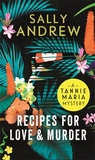
Recipes for Love and Murder

Recipes for Love and Murder (Tannie Maria Mystery, #1)Recipes for Love and Murder by Sally Andrew
My rating: 5 of 5 stars

OMG. What’s not to like? This reads like an Alexander McCall Smith novel realized with a little less humour, perhaps, but with an actual murder to solve and an amateur detective, in this case a cookery writer who has been forced to swap her regular column to one that’s an advice-for-the-lovelorn in a small-town newspaper that is syndicated throughout a stretch of rural South Africa.

Our heroine, Tannie (“Aunty”) Maria, divides her time between chasing up culinary and housekeeping clues (that the police fail to recognize as being significant) and cooking roast lamb, curries, and various cakes to nourish her friends, plus a never-ending supply of cereal bars she calls rusks. As is the case with many books that use food for their binding theme, you’ll find many of these recipes printed in the back matter. Think Fried Green Tomatoes at the Whistle Stop Cafe and Like Water for Chocolate. I’ve always thought it’s a very generous thing to do.

Andrew throws in Afrikaans terms and colloquial slang freely, but I didn’t get bogged down by them at all. Anything with -berg on the end is a mountain, anything with -bos is a bush, and anything with -bok or -bokkie is some kind of buck, like a roebuck. Blerrie, as you’ll quickly discern, is probably bloody. Sometimes she helps by explaining these things; sometimes she doesn’t. It doesn’t matter, though—it all adds to the book’s local colour. If the statistics she quotes about wife beating and the incidence of murder in South Africa are true (and I suspect they are), then they are horrifying in the extreme.

A thoroughly enjoyable read. Take Tannie Maria’s advice and fill your hearts with love. God knows we could all do with some right now.

View all my reviews

Friday, 16 March 2018

Death Descends on Saturn Villa

Death Descends on Saturn Villa (The Gower Street Detective #3)Death Descends on Saturn Villa by M.R.C. Kasasian
My rating: 5 out of 5 stars

This was an unexpected find, not least because it’s set in my own genre and era. It’s 1883 and when London’s foremost personal detective Sidney Grice is called away to Yorkshire on a case, his goddaughter and ward Miss March Middleton decides to become London’s first foremost personal lady detective with disastrous results to herself.
Like many a Wilkie Collins, the first-person narrative is shared between characters, and, just like Wilkie Collins, Kasasian doesn’t mind injecting a lot of humour. The style, which is like no other I’ve ever read, careers between absurdist comedy and high Gothic. Although they both work, I’m not sure they always sit well together and the change can be a little unsettling, especially when it comes mid-narrative. And yet the story is always grounded in first-class research.
The characters are wonderful, right down to the slovenly maid, Molly (even if in real life “nobody would not never speak this way, never not”). Your heart soars when she’s allowed to become something more than a comic cypher.
As for the mystery element, there are some truly puzzling accounts of the book’s various victims apparently putting themselves to death, with equally ingenious, intricately set-up solutions—which again seem to be based on scrupulous research (Uncle Tolly’s bedroom; Mrs Prendergast’s corsets).
Since this is the first time I’ve delved into this series, I have no idea whether the author routinely ends his books with a character reflecting on the events some sixty years later (1943), or whether this was unique to this one, but here he poignantly juxtaposes his novel’s subject matter and themes with the Nazi attempt to exterminate the Jews.
I am looking forward to reading more.
But that’s just my own humble opinion…what do you think? Do let me know!

View all my reviews

Thursday, 22 February 2018

The Family Vault

The Family Vault (Kelling & Bittersohn, #1)The Family Vault by Charlotte MacLeod
My rating: 5 of 5 stars

This is a title that was suggested to the Crimes & Thrillers reading group I attend by one of my readers (and now firm online friend) in Canada, and I find it absolutely incredible that I’m only now getting to discover this wonderful series featuring the amateur sleuths Sarah Kelling and Max Bittersohn—for the fact is its author Charlotte MacLeod is virtually unknown here in the UK.
Why? It’s my guess it has something to do with her original publisher’s territorial rights, and an unwillingness here in this country to take on a book that uses so much American terminology. If I’m right, how damnably parochial and very short sighted of them was that??!! As it’s still not being published here, the library managed to order us a few paperback copies from Amazon—which turned out to be printed here, so I imagine they’re probably print-on-demand. And people wonder why publishers have become an endangered species!
Great characters, great story, an attractive pair of detectives; quite simply a fab introduction to what promises to be a truly excellent series. But you probably know that already and have known it for years…unless, of course, you happen to live in the UK.
But that’s just my own humble opinion…what do you think? Do let me know!

View all my reviews

Tuesday, 13 February 2018

Closed Casket

Closed CasketClosed Casket by Sophie Hannah
My rating: 5 of 5 stars

“The Brand New HERCULE POIROT Mystery” proclaims the cover of this book which boasts the full support of Agatha Christie Limited. Christie fan that I am, I understandably approached it with some caution. I needn’t have worried. It is absolutely wonderful.
It starts with a chapter delivered in the third person, in no sense mimicking the great Ms Christie but so well written I was immediately hooked. I would have been quite happy for it to continue in this vein, but it didn’t. It then changed to the first-person narrative of one Edward Catchpool—a detective with London’s Scotland Yard—whose voice at times might have been that of the good Captain Hastings himself. But do not curl your lip, I beg of you, mon ami. This is no meagre pastiche by any means.
Lady Playford, author of the beloved Shrimp Seddon mysteries (whose precocious ten-year-old heroine leads of a gang of child detectives), invites Poirot and Catchpool to a family house party at her rural Irish mansion where she announces that she has changed her will, disinheriting her two children in favour of her terminally ill secretary.
Hannah’s characters are at once complex and yet instantly recognizable. Even the supporting cast is beautifully drawn. I was immediately attracted to the ageing Irish cook who takes one look at Catchpool and says, ‘I knew I was right—you’ve got that look about you!’
“…I asked the obvious question, to which she answered, ‘The look of a man who drinks water all through the night!’ She said this as fiercely as if she were accusing me of baby farming or some equally hideous crime, then pointed to her mouth and said, ‘Dry lips—I can see them from here!’”
She enigmatically goes on to relate a seemingly unconnected story about a nephew who had once stolen some peppermints from a bowl and had broken the bowl in the process. Although I wasn’t expecting an explanation for these bizarre and unfathomable utterances on her part (the mother of a friend of mine was an ageing Irish cook whose comments and observations were just as obtuse), I was truly delighted with it when one finally came.
That kind of sums up how very generous this book—and its author—is. Cozy thrillers don’t get much cozier…and certainly no more challenging. I think the last words should go to Lady Playford, Shrimp Seddon’s creator, whilst I go hunt down the first in Hannah’s series:
“‘…if my plots were simpler then people would guess, wouldn’t they? And you can’t have people guessing. I’m afraid I don’t write for dimwits and nor will I, ever. I write for those capable of rising to an intellectual challenge.’”


View all my reviews

Monday, 12 February 2018

The Moonstone

The MoonstoneThe Moonstone by Wilkie Collins
My rating: 5 of 5 stars


It kills me to think that it’s coming up to forty years since I first read The Moonstone by Wilkie Collins. Though I list it among my influences as a writer, the truth is, when I saw it was the next book for my Crimes & Thrillers reading group, I seriously wondered whether I’d still be able to understand it, let alone enjoy it.

I tend to believe that, with some notable exceptions, the shelf life of a novel is approximately fifty years, by which point the cultural references are lost and, as our language has developed and moved on, the original meaning of the text becomes obscure. There’s an unintentionally hilarious example of this in The Moonstone, where Mr Franklin Blake, a young man with prospects, asks Mr Bruff the solicitor to arrange a meeting with his beloved Rachel at the lawyer’s house:

…‘May I venture to suggest – if nothing was said about me beforehand – that I might see her here?’
‘Cool!’ said Mr Bruff.


Cool, especially followed an exclamation mark, no longer means “impudent” or “presumptuous” as it once did. But as The Moonstone is approximately a hundred and fifty years old, it’s amazing that the bulk of it remains perfectly readable, thanks in the main to the old family retainer Gabriel Betteredge’s narrative voice, in which half of the book is delivered.

Examine the plot and you’ll see that the two main characters are the star-crossed lovers, Franklin Blake and Miss Rachel Verinder. But, judged by their actions alone, they come across as surprisingly unsatisfying heroes. Rachel (who isn’t permitted a narrative voice) spends the first half of the book locked in her room refusing to see or to speak to anyone; Blake (whom I liked during his time as a narrator) spends the entire book trying to get Rachel to see him and is disappointed time and time again. The only reason I was prepared to think highly of these two was because Gabriel Betteredge clearly thinks highly of them and manages to humanize them by recalling snippets from their youthful past.

Collins went to great lengths to give each of the many narrators his or her own identifiable voice. Most work very well, and, really, these are the characters I take with me having finished the book. There are however some exceptions. The retired Sergeant Cuff, formerly of Scotland Yard, could not sound drearier, and his summing up of the case—after the true thief is unmasked at the climax—falls especially flat. But it’s Mr Murthwaite, traveller to exotic climes, who provides the most impenetrable and boring speech of the whole novel:

‘…The organization is a very trumpery affair, according to our ideas, I have no doubt. I should reckon it up as including the command of money; the services, when needed, of that shady sort of Englishman, who lives in the byeways of foreign life in London; and, lastly, the secret sympathy of such few men of their own country, and (formerly, at least) of their own religion, as happen to be employed in ministering to some of the multitudinous wants of this great city. Nothing very formidable, as you see!…’

Hmm…

I also found the Christian busybody Miss Clack’s narrative, which proved really popular with readers when The Moonstone was first serialized, to be fairly tough going, though it’s never as impenetrable as Murthwaite. Luckily some of its humour still survives. One of Clack’s favoured charities is the British Ladies’ Servants’ Sunday Sweetheart Supervision Society, presumably providing a chaperone service for courting maids on their half day off – as if their lives were not made miserable enough already!

There are two minor characters who deserve special attention: the maid Rosanna Spearman and the doctor’s assistant Ezra Jennings. Both are outcasts, both possess some physical deformity of a sort, and both are denied the partner whom they love. It occurs to me that they represent what Rachel and Blake might have become if the mystery of the diamond had never been sorted out. Jennings, who is instrumental in this, clearly has a well-developed back story, and one that is shrouded in mystery, which made me wonder if Collins was preparing the way for a future novel.

I wondered the same thing too about a very minor character, Octavius Guy—better known as Gooseberry—who, like Jennings, turns up towards the end of the book. Despite being a minor character, he is very likeable and has praise heaped on him from all quarters. Here’s what Sergeant Cuff has to say:

‘One of these days,’ said the Sergeant, pointing through the front window of the cab, ‘that boy will do great things in my late profession. He is the brightest and cleverest little chap I have met with, for many a long year past…’

For all its faults I still love The Moonstone, and cherish the fact that my own writing has been compared to it. I’ve come to notice that nearly all of my favourite books are flawed in some fashion, for which I always seem to love them more. The Moonstone remains a great book.

But that’s just my own humble opinion…what do you think? Do let me know!

View all my reviews

Thursday, 8 February 2018

Moriarty

Moriarty (Sherlock Holmes, #2)Moriarty by Anthony Horowitz
My rating: 5 of 5 stars

Take the Scotland Yard detective who went up against Holmes in The Red-Headed League, re-imagine him as something quite different to how Dr Watson portrayed him in that particular account, then pair him up with, say, a Pinkerton agent, and you have all the makings for a bestselling book.
Throughout Horowitz refers to a second case where Inspector Jones crossed paths with the famous detective (The Case of the Three Monarchs; Horowitz’s own invention). In an act of extraordinary generosity, Horowitz provides us with Watson’s account of it at the very end of the book, an homage perfectly recounted. It even goes so far as to elucidate the problem of how far the parsley had sunk into the butter!
A real treat for Sherlock Holmes fans. But that’s just my own humble opinion…what do you think? Do let me know!

View all my reviews

They Came to Baghdad

They Came to BaghdadThey Came to Baghdad by Agatha Christie
My rating: 5 of 5 stars

“There must be an end of all the savagery in the world, the wars, the misunderstandings, the suspicions. A common meeting ground, that’s what we all need. Drama, art, poetry—the great things of the spirit—no room there for petty jealousies or hatreds.”
“N-no,” said Victoria doubtfully, recalling friends of hers who were actresses and artists and whose lives seemed to be obsessed by jealousy of the most trivial kind, and by hatreds of a peculiarly virulent intensity.

There’s normally a healthy dose of humour to most of Ms Christie’s books, but this time I laughed and laughed! The intrepid heroine, Victoria Jones, is a thinly disguised young Agatha, getting herself into and out of all sorts of scrapes in the exotic city of Baghdad and nearby archaeological digs. There even seems to be a veiled reference at the very end of chapter nineteen to Ms Christie’s own disappearance twenty-five years earlier:
“Reminds me—now what does it remind me of?—ah! Yes, Elizabeth Canning, of course. You remember she turned up with a most impossible story after being missing a fortnight. Very interesting conflict of evidence—about some gipsies, if it’s the right case I’m thinking of. And she was such a plain girl, it didn’t seem likely there could be a man in the case.”

See? Laugh and laugh! Sometimes as vivid as a travelogue this thriller fairly gallops along. I’d read it once before, but had forgotten just how good it is.
But that’s just my own humble opinion…what do you think? Do let me know! Read (or rather re-read) for the currently-on-pause Goodreads’ Agatha Christie Reading Group—and thoroughly enjoyed!


View all my reviews

Mrs. McGinty's Dead

Mrs. McGinty's Dead (Hercule Poirot, #30)Mrs. McGinty's Dead by Agatha Christie
My rating: 5 of 5 stars


Mrs. Oliver cast a glance over the Penguin display. It was slightly overlaid by children’s waders.
“The Affair of the Second Goldfish,” she mused, “that’s quite a good one. The Cat it was Who Died—that’s where I made a blowpipe a foot long and it’s really six feet. Ridiculous that a blowpipe should be that size, but someone wrote from a museum to tell me so. Sometimes I think there are people who only read books in the hope of finding mistakes in them. What’s the other one of them? Oh! Death of a Débutante—that’s frightful tripe! I made sulphonal soluble in water and it isn’t, and the whole thing is wildly impossible from start to finish. At least eight people die before Sven Hjerson gets his brainwave.”

Ms Christie’s alter ego Ariadne Oliver is in fine comic form in this one, bemoaning the lot of the mystery writer. As for The Cat it was Who Died—surely that’s Death in the Clouds, don’t you think? It’s interesting to speculate if the museum in question was actually the British Museum.
A truly delightful mid-period Christie with surprises right to the very end.
But that’s just my own humble opinion…what do you think? Do let me know! Read (or rather re-read) for the Goodreads’ Agatha Christie Reading Group.


View all my reviews

Career of Evil

Career of Evil (Cormoran Strike, #3)Career of Evil by Robert Galbraith
My rating: 5 of 5 stars

“My heart sinks every time I open a thriller and it turns out to be about rape or sexual child abuse, or, as is the case here, both.” Thus begins a recent review I wrote for a different book, by a different author, and one which amply justified my sinking heart.
Not so with this one! Hurrah! You know from the start you’re in capable hands, that Rowling will tackle these difficult subjects to the full, and deliver for the reader an emotionally satisfying conclusion.
No, my heart sank for a very different reason; you will know what I mean. My favourite of the series so far. Desperately awaiting the next. Loved and reviewed for #MysteryWeek
But that’s just my own humble opinion…what do you think? Do let me know!

View all my reviews

Why Didn't They Ask Evans?

Why Didn't They Ask Evans?Why Didn't They Ask Evans? by Agatha Christie
My rating: 5 of 5 stars

“It’s as though we’d walked on to the stage in the middle of the second act and we haven’t really got parts in the play at all, but we have to pretend, and what makes it so frightfully hard is that we haven’t the faintest idea what the first act was about.”
Frankie nodded eagerly.
“I’m not even so sure it’s the second act—I think it’s more like the third. Bobby, I’m sure we’ve got to go back a long way…And we’ve got to be quick because I fancy the play is frightfully near the final curtain.”
“With corpses strewn everywhere,” said Bobby. “And what brought us into the show was a regular cue—five words—quite meaningless as far as we are concerned.”
Why didn’t they ask Evans?”

This is one of Ms Christie’s attractive thrillers that feature a pair of amateur sleuths (with no sign of Miss Marple or Monsieur Poirot lurking in the background). In this case it’s the happy-go-lucky Bobby, the fourth son of a country vicar, and the thoroughly modern Lady Frances, better known to her friends as Frankie. The plot, which is generously seasoned with all manner of thrilling devices, could well have served as a template for all of Francis Durbridge’s Paul Temple mysteries. There’s (and trust me, there are no spoilers here, just teasers) the enigmatic words on the dying man’s lips, the business—in the theatrical sense of the word—with the photograph used to identify the body, the mysterious foreign doctor in his high-walled clinic situated in some out-of-the-way spot in the countryside, and a gang that’s apparently trafficking in morphine. Then there’s the staged accident to gain ingress to a house, the more-than-a-faint-whiff of The Woman in White about the mysterious Moira Nicholson, and the casual mention-or-two of a possible suicide by a seemingly neurotic millionaire. It was so good to read this again.
But that’s just my own humble opinion…what do you think? Do let me know! Read for the Agatha Christie Reading Group at Goodreads. A perfect cozy for #MysteryWeek

View all my reviews

The Silkworm

The Silkworm (Cormoran Strike, #2)The Silkworm by Robert Galbraith
My rating: 5 of 5 stars

Having started this book (and well before finishing) I took a peek here on Goodreads to see how it fared for reviews. I wasn’t surprised to see how highly it was rated—and deservedly so, in my opinion. No, the surprise was the one review that took Ms Rowling to task for missing the opportunity of making Robin Ellacott the protagonist, and offering her advice on how to improve her writing in future (for which, I am sure, Ms Rowling will be eternally grateful).
Having finished the book, which is steeped in the toxic world of writers, literary agents, and publishers, I began to wonder whether the review in question was not some kind of “knowing” tribute—an in joke, if you will—for the writer sounded uncannily like one of Rowling’s own characters—self-opinionated, overbearing, and hilariously drawn.
Ms Rowling’s pen is scathing, and never more so than when dealing with self-publishing authors. In our defence, let me quote from a poem by one of the more scurrilous of our number. Bear with me; it’s worth it:
Little lamb, who made thee
Dost thou know who made thee,
Gave thee life, and bid thee feed
By the stream and o’er the mead;
Gave thee clothing of delight,
Softest clothing, woolly, bright;
Gave thee such a tender voice,
Making all the vales rejoice?
Little lamb, who made thee?
Dost thou know who made thee?
—from Songs of Innocence and of Experience, by the self-published writer and printer Mr William Blake

Did you clock the missing question mark? Outrageous! And you should see how he constantly misspells the word “tiger”! Oh, how I laughed! But I digress.
I love how Strike and Robin are perfect counterfoils, tag-teaming their way through the narrative. I laughed out loud at the chain-smoking agent and the literary horrors foisted upon us by the indie author. I took the bait—so carefully laid—and put my money on the wrong horse. I prayed for Robin and Matthew’s relationship to break up, but then you don’t always get what you want, do you? I am already lapping up the third book. Long may the series continue!
Having just said that, it occurs to me to wonder how many traditionally published authors would be able to identify the English tense used in “Suffice it to say” or even “God save the Queen” without Googling it? Hmmm.
But that’s just my own humble opinion…what do you think? Do let me know! Enjoyed and reviewed for #MysteryWeek


View all my reviews

The Quiche of Death

The Quiche of Death (Agatha Raisin, #1)The Quiche of Death by M.C. Beaton
My rating: 5 of 5 stars

A simply written blueprint for a staggeringly successful cosy thriller series. Agatha Raisin starts off as being flawed to the point of caricature, but in Beaton’s hands—through a beautifully manipulated character arc—she becomes loved and human and alive.
But that’s just my own humble opinion…what do you think? Do let me know!

View all my reviews

The Coroner's Lunch

The Coroner's Lunch (Dr. Siri Paiboun, #1)The Coroner's Lunch by Colin Cotterill
My rating: 5 of 5 stars

Dr Siri Paiboun—the one and only coroner in 1970s Laos—is a man to whom the dead give up their secrets…though as much through their otherworldly apparitions to him as by his own forensic investigations. And he has a fine cast of loveable characters to help him: Nurse Dtui, who reads trashy Thai magazines that are frowned upon by the new Communist regime, yet has the brains and chutzpah to become his assistant; Mr Geung, a young man with Downs Syndrome, who is more experienced in autopsy than the good doctor himself; even Saloop, the dog, who undergoes a massive change of heart as the novel progresses.
Full of gentle humour—often at the expense of the new regime, though occasionally at human behaviour—this is a great start to a wonderful series.
But that’s just my own humble opinion…what do you think? Do let me know!

View all my reviews

Revelation

Revelation (Matthew Shardlake #4)Revelation by C.J. Sansom
My rating: 5 of 5 stars

Six years have gone by since Tudor lawyer Matthew Shardlake’s first outing as a detective. This time he is hunting down a serial killer whose horrific murders are staged to recreate a string of biblical prophecies from the Book of Revelation.
It’s a gripping story and beautifully told, set against a backdrop of fanatical religious factions and the mental illness that both they and the biblical texts, which are now available in English for the very first time, can cause. Classic Sansom at its best.
But that’s just my own humble opinion…what do you think? Do let me know!

View all my reviews

Dissolution

Dissolution (Matthew Shardlake, #1)Dissolution by C.J. Sansom
My rating: 5 of 5 stars

The year is 1537, the tyrant Henry VIII is on the throne, his much-anticipated religious reform is souring by the minute, and now that the smaller monasteries have been dissolved it is time for the larger ones, who together own great swathes of English countryside, to capitulate. When one of Thomas Cromwell’s commissioners is decapitated whilst persuading one such community to do so “voluntarily”, the Vicar General sends the hunchback lawyer Matthew Shardlake to investigate.
Historical whodunnits really don’t get any better than this, not least because you don’t need any foreknowledge of the period to appreciate it; Sansom lays before you all you need to know against a background of beheadings, tortured confessions, and even talking parrots imported in appalling conditions to amuse London’s elite.
He also paints a fine picture of a religion in turmoil, with the papist monks who believe they need to intercede between God and the common folk in order to ease their paths out of purgatory, the reformers who to varying degrees believe that intercession is neither necessary nor desirable (for there is no such thing as purgatory), the individual hot-gospellers who have access to an English bible for the very first time and, gorging on the words, believe themselves to be God’s own prophets, and the king and his cronies who cynically use reformation to feather their own pockets. Then, of course, there are the common folk themselves who quite rightly suspect that they will be no better off when all this reformation nonsense is done and dusted.
But that’s just my own humble opinion…what do you think? Do let me know!

View all my reviews

The Curse of the Pharaohs

The Curse of the Pharaohs (Amelia Peabody, #2)The Curse of the Pharaohs by Elizabeth Peters
My rating: 5 of 5 stars


I LOVED this. Elizabeth Peters is SO good. My Crimes & Thrillers group read the first in the series some time ago and enjoyed it so much that, now we have separated ourselves from the library which spawned the group and are now obliged to suggest our own titles, I thought we would probably enjoy reading the second one Although I’m only coming to this series (begun in the 1980s) now (2016), the writing is timeless.
As cosies go, Amelia Peabody’s is an not just an exceptional narrative voice, it’s seminal. I was laughing out loud at the antics her infant son Ramses gets up to as the novel begins. I never quite managed to work out how old he is when he unearths the bone from the compost heap (I’m guessing older than two but not yet three, at which point he has begun to write—not just print—but WRITE).
‘I fink,’ he said, ‘it is a femuw. A femuw of a winocewos.’
‘There are no rhinoceroses in England,’ I pointed out.
‘A a-stinct winocewos,’ said Ramses.
Her eye for detail is as is as extraordinary as her eye for humour.
A murder ensues. Motives abound. At some point Peters claims that, unlike in reality, writers of sensational detective fiction can suit the facts to how they themselves would like them to be. If I were writing this book, I would have a very different murderer—even though the culprit turned out to be exactly who I wanted them to be.
Fantastic stuff. A pity then that libraries seem to rid themselves of older books in order to accommodate new ones, especially when said books are clearly classics.
But that’s just my own humble opinion…what do you think? Do let me know!

View all my reviews