Wednesday, 7 February 2018

The Glass Room

The Glass Room (Vera Stanhope, #5)The Glass Room by Ann Cleeves
My rating: 3 of 5 stars

Here the murder occurs on a week-long crime writers’ course at a writers’ retreat in the Newcastle countryside. It’s interesting in that it touches on the obsessive nature and self-importance of fiction writing, as well as some of its processes (plus the truly destructive nature of literary criticism). I felt disappointed, however, that I never really got to see the inner workings of D. I. Stanthope’s mind, the way I did, say, for Nina Backworth, one of the tutors on the course. As a consequence, I found it hard to relate to her. A book for those who are already fans, I suspect.
I’m truly ashamed to admit that when I first posted this review, I got the name of Cleeves’s detective wrong. It’s now corrected, but I apologize profusely!
But that’s just my own humble opinion…what do you think? Do let me know! Read for the Crime & Thrillers reading group that I attend at Canada Water Library, and also for my 2015 Goodreads reading challenge. View all my reviews

The House of Silk

The House of Silk (Sherlock Holmes, #1)The House of Silk by Anthony Horowitz
My rating: 4 of 5 stars

I loved Arthur Conan Doyle’s Sherlock Holmes stories when I was younger, and I wondered how this, Anthony Horowitz’s 2011 addition to the Sherlock Holmes canon, would measure up. Not too shabbily at all, as it turns out. I suppose the thing that impressed me most was how perfectly Horowitz channels Watson’s narrative voice. Its tone and pacing are sublime. Close your eyes and you are there.
That said, there are a few points that would never have made it into a Conan Doyle book. Firstly the subject matter, which would have made the author blush. Horowitz neatly gets round this with Watson’s caveat that the book should not be published for the next 100 years; Horowitz also argues convincingly in his notes that modern authors must cater to modern audiences, and in doing so cannot afford to write purely Victorian books. Secondly it’s clear that Horowitz understands women better than Conan Doyle ever did, and manages to portray them as more fully-fleshed, rounded characters, thank goodness. Thirdly and last, the subplot that concerns itself with the Chicago gang feels slightly off kilter; to my mind it’s the kind of device a young Agatha Christie might have employed.
But this is nitpicking. It’s a breathless, beautifully researched romp through Victorian London and I for one enjoyed it very much.
But that’s just my own humble opinion…what do you think? Do let me know! Read for the Crime & Thrillers reading group that I attend at Canada Water Library, and also for my 2015 Goodreads reading challenge.


View all my reviews

Murder on a Summer's Day

Murder on a Summer's Day (Kate Shackleton, #5)Murder on a Summer's Day by Frances Brody
My rating: 4 of 5 stars

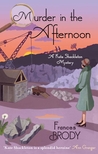
I enjoyed Frances Brody’s Murder in the Afternoon enough to try another of her Kate Shackleton series. Here our level-headed Yorkshire lass comes up against officialdom when she tries to investigate the murder of rich playboy maharajah who goes shooting on the moors. I love how Brody manages to ignite the reader’s indignation on behalf of her detective every time some man or other—in this case, her cousin, her cousin’s boss, and the local police officer—comes out with a patronizing sexist slight. It’s 1924, so, believe me, “unwitting” slights against women pop up with depressing regularity. I enjoyed this very much!
But that’s just my own humble opinion…what do you think? Do let me know! Read as part of my 2015 Goodreads reading challenge.


View all my reviews

Murder In The Afternoon

Murder In The Afternoon (Kate Shackleton, #3)Murder In The Afternoon by Frances Brody
My rating: 4 of 5 stars

A really attractive cosy mystery set in the north of England in the 1920s. Kate Shackleton, adoptive daughter of a superintendent in West Riding’s constabulary and his landed-gentry wife, has set herself up as a private detective. Her husband went missing-in-action during the war, but she’s a modern woman who is moving on with her life: she now has brand new suitor. In a neat twist on the usual will she/won’t she? question, I think most readers would be aghast if she did! Don’t do it, Kate! You may be a good judge of character, but he’s a chauvinist! I hesitate to mention anything of the plot, lest I spoil it for anyone, but there’s a great cast of supporting characters and Brody has a nice turn of phrase. Here, for instance, Kate listens through the keyhole to a mystery visitor:
The voice was cultured, with rounded vowels and carefully enunciated word endings; too careful, perhaps. It was the voice of someone who has just filed her nails.Fantastic!
But that’s just my own humble opinion…what do you think? Do let me know! Read for the Crime & Thrillers reading group that I attend at Canada Water Library, and also for my 2015 Goodreads reading challenge. Very much enjoyed.


View all my reviews

A Death in Summer

A Death in SummerA Death in Summer by Benjamin Black
My rating: 3 of 5 stars

On the cover of this paperback it says, “John Banville writing as Benjamin Black”, a clue as to why this novel reads as a piece of literature and not a standard whodunnit (Banville won the Man Booker Prize some years back). I confess I’ve never read anything like it. There’s a policeman or two, although the actual (amateur) detective in this case is the pathologist. It’s set in Ireland, and while no particular date is mentioned, Banville carefully and lovingly reconstructs the early 1960s. Everybody chain smokes in hospitals, police stations, and restaurants; a rather chic woman wears tapered black trousers with elastic straps underfoot to keep them taut; the pathologist’s daughter seeks her independence by taking a bedsit. There’s a murder and a murderer, but the distant look on some character’s face, or the way he or she rearranges their hands as the last of the violet light fades in the sky takes precedence over any questioning, clue gathering or detecting. The solution is arrived at via a process of osmosis, but the writing is so good that this feels perfectly acceptable.
But that’s just my own humble opinion…what do you think? Do let me know! Read for the Crime & Thrillers reading group that I attend at Canada Water Library, and also for my 2015 Goodreads reading challenge.


View all my reviews
The Ides of April

The Ides of April (Flavia Albia Mystery, #1)The Ides of April by Lindsey Davis
My rating: 3 of 5 stars

I’ve read many—but by no means all—of Lyndsey Davis’s Falco mysteries, and have always enjoyed them enough to read a new one when I come across it. In a nice development, the Didii family informing business devolves to adopted daughter Flavia Albia in The Ides of April. With her runaway mouth and streetsmart ways, she makes a great replacement for Falco, and it’s really nice to find ourselves back in Fountain Court again after so many years.
The very physical (and rather funny) description of an evening’s rites during the festival of Cerialia will remain in my memory, as will Robigo the fox, as will the wonderful plot twist at the end that I should have seen coming (but didn’t, dammit).
But that’s just my own humble opinion…what do you think? Do let me know! Read for my 2015 Goodreads reading challenge.


View all my reviews

Crocodile on the Sandbank

Crocodile on the Sandbank (Amelia Peabody #1)Crocodile on the Sandbank by Elizabeth Peters
My rating: 5 of 5 stars


Here’s an early photo of one of this book’s main characters, the archaeologist Radcliffe Emerson. Well, no…you’re right; it’s actually an early photo of the archaeologist Flinders Petrie. But I think I’ve got a point, don’t you? If you’re left in any doubt, take a look at the much later photograph at the bottom of this post. Isn’t that Emerson striding off over the sands, as he so often does throughout this novel? And could that possibly be his brother Walter following behind?
Amelia Peabody makes a fantastic protagonist. She’s comically forthright to a fault, yet retains sufficiently self-awareness to be able to admit to these flaws on occasion.
Elizabeth Peters conjures up characters that are as delightful as they are believable, and her knowledge of Egyptology—and of the period when this is set—is vast. It’s all the more remarkable, therefore, that she uses it to pepper up the story without ever allowing it to intrude.
But that’s just my own humble opinion…what do you think? Do let me know! Read for the Crime & Thrillers reading group that I attend at Canada Water Library, and also for my 2015 Goodreads reading challenge. Thank you to Alice King (the reading group’s organizer) for introducing me to this wonderful, wonderful series. I shall in time be reading more.


View all my reviews